
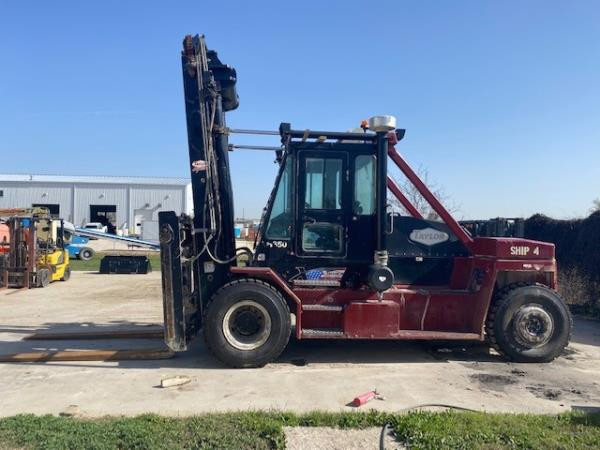


Telescopic forklifts are engineered to have a pronged lift which utilizes a crane or an arm to come over the top of a truck. These lift trucks enable you to lift the load a lot higher and have better control of where it goes at those heights. This additional control is due to the fact that you are moving the load on the end of a crane, that is referred to as a telescopic boom.
The load when positioned on the lift truck can move both away from and towards the forklift cab, which is a unique feature that a regular forklift is unable to accomplish. The telescopic forklifts could provide both height and versatility. The telescopic forklift is really popular in the construction and agricultural industries. Moreover, they are an excellent choice in circumstances where you might need to work with something which needs more control that a standard lift truck.
Frame Tilt
A unique feature common to telehandlers is the frame tilt. Operators can activate the lateral controls to move the frame's angle from side to side. This particular frame can be moved 10 to 15 degrees in either direction from horizontal. There is a tube filled with liquid that is curved and mounted within the cab. This is the frame tilt indicator or level indicator and works like a carpenter's level. It has a bubble indicator which indicates the frame's lateral angle relative to the ground. This is an extremely helpful device that is used to ensure the frame is level prior to raising the boom in rough environments.
Steering
There are several units of telehandlers which offer rear wheel steering, like a vertical mast type unit. Most unit's provide 3 steering options which the operator could select; crab, circle and front steering. Like for example, if the operator selects the "front" steering option, just the front wheels of the machinery will react to the steering wheel's movement.