







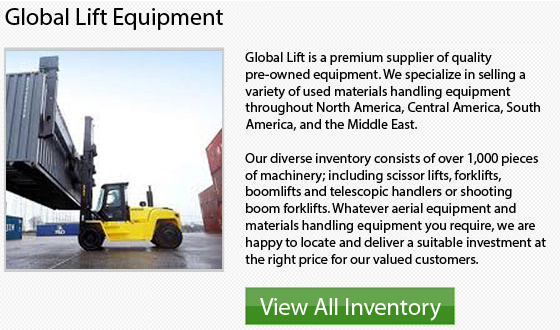
In the past decade, telehandlers, also referred to as rough terrain variable reach lift trucks, have surpassed the popularity of motorized mobile machinery. These machinery have become the gem of the construction business and with excellent reason. These machines are versatile, really strong and practical. Since the number of units and manufacturers has exploded during the last 5 years or so, there are presently a number of these machines readily available on the market.
In technical terms, a telehandler is considered to be an ITA* Class 7 Powered Industrial Truck. This description means it is a rough terrain lift truck, but only in name only. Any of the similarities between a vertical mast type of forklift and a telehandler literally ends on sight and on operation. There are some other significant differences between the two machines discussed below.
As apposed to a vertical mast, a telehandler has an entirely different appearance as it is made with a horizontal boom. A telehandler with a jib attachment from a distance can look more like a crane than a forklift. The boom could telescope or retract and extend to lengths of 30 feet and beyond that depends on the particular model. The boom is also able to elevate to an angle from horizontal to roughly 70 degrees. Telehandlers have been referred to as "zoom booms" because of their ability to telescope. This name has become rather famous with the operators.
One more optional boom related function is referred to as a "Transaction". The telehandler equipped with this option mounted on the chassis. When the operator starts it, the boom would move back and forward for distances up to 8 feet or more. Amongst the main advantages of this function is that it enables the forks to be withdrawn from a load cleanly or with no snags and the forks can be inserted underneath cleanly, regardless of the boom angle.
The construction industry have been revolutionized by zoom booms. They can perform many jobs that used to take much more man-power and time to finish.